
Views: 0 Author: Site Editor Publish Time: 2026-09-09 Origin: Site


Article Intro: A jewelry display box is packaging designed to sell from the shelf — a transparent or showcase structure that presents the piece as the product, turning the box into a miniature display case. For jewelry brands, display packaging answers the retail moment: how the piece looks on the counter, at the trade show, and in the customer's first glance. This guide covers display box styles, floating displays, materials, display sets, and the decisions that separate showcase packaging from everyday boxes.
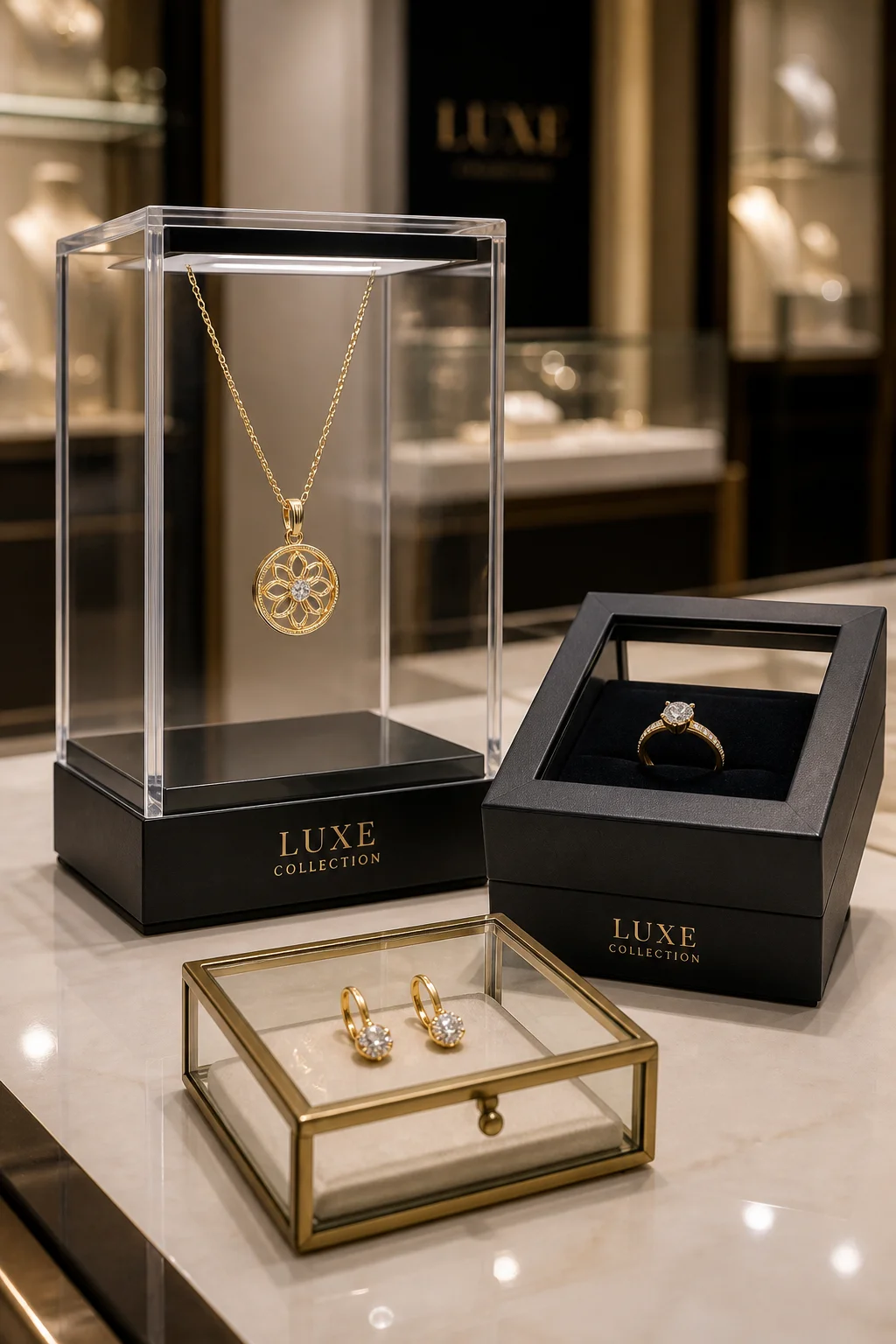
Showcase packaging — floating display, window box, and glass sample display
A jewelry display box is a box that presents rather than conceals — transparent panels, open-front structures, or showcase interiors that let the piece be seen before it is opened. Where a standard jewelry box protects the piece until the reveal, a display box sells the piece continuously: on the counter, on the trade-show table, or in the retail window.
Display packaging overlaps with standard packaging at the edges — a rigid box with a clear lid is both a box and a display — but the design logic is different. Standard boxes are engineered for the journey (protection, stacking, transit). Display boxes are engineered for the moment (visibility, angle, light). A brand that buys display packaging is buying a sales tool, not a container.
The floating display is the most distinctive format in the display family: the piece appears to float inside a transparent structure, suspended rather than resting on a surface. The effect is achieved with a clear panel or tension mount that holds the jewelry from behind or below, invisible at most viewing angles, so the necklace or ring hangs in space like a museum specimen.
Floating jewelry display box formats and floating jewelry display packaging follow the same principle at different scales:
The transparent case: An acrylic or glass case with the piece mounted on a clear internal stand — the countertop showcase that works for pendants, rings, and small sets.
The window box: A rigid box with a large clear window in the lid and an internal mount that lifts the piece toward the window, creating the float effect from the top view — the retail-box version that ships flat and displays standing.
The shadow-box mount: A deep display with the piece suspended on clear filament or a fine mount against a colored back panel — the gallery format for hero pieces at trade shows.
The float effect depends on two details: the mount must be genuinely invisible at the display angle, and the piece must be the only thing the eye lands on. A floating display with a visible mount or a busy background fails both tests.
The display box menu covers the counter and the show floor:
Style | Structure | Best for |
|---|---|---|
Window-top rigid box | Rigid base, clear window lid | Retail shelf, gift counter |
Floating display box | Clear case or window + invisible mount | Hero pieces, showcases |
Open-front display | Box without a front panel, interior visible | Trade shows, counter lines |
Glass sample display box | Glass or glass-like panels on a rigid frame | Wholesale samples, material swatches |
Display box set | Coordinated multi-box display unit | Collections, retail lines |
The window-top rigid box leads the retail volume — it ships like a standard box but sells like a display. The glass sample display box and the display box set serve the B2B moments: showing a buyer the actual product, and showing a whole collection at once. A custom jewelry display box program starts from the structure choice and adds the brand layer — foil, interior color, and display angle — without changing the box's selling logic.
Display packaging leans on transparent and structural materials:
Clear rigid panels: Acrylic and PETG for floating cases and window lids — lighter than glass, shatter-safe in transit, and optically clear at display thickness.
Glass and glass-like options: Real glass tops for the premium counter look, where the weight signals quality and the retail environment protects the box from transit risk. The glass box display custom route lets a brand specify glass where the piece and the setting justify it.
Rigid and fabric bodies: The box body follows standard construction — rigid board wrapped in velvet, leatherette, or linen — with the interior built for display angles rather than flat storage. A jewelry display velvet pouch is the soft display option, holding a piece upright in a counter tray while protecting it between showings; a jewelry pouch ring display version holds single rings upright at the counter the same way, and a plastic jewelry display bag adds a clear, low-cost display layer for trade-show stock.
Rigid packaging jewelry box for display storage: The dual-purpose format — a rigid box that displays through a window or an open front and still stores the piece flat — covers brands that want one box for both the counter and the drawer.
A jewelry display box set is the retail line in miniature: a coordinated group of display boxes that present a collection together — earrings, rings, and pendants each in their display format, unified by material and finish. Sets sell collections, not pieces: a customer who sees three coordinated displays is more likely to consider the set, and retailers buy display sets to merchandise a whole counter in one order.
For jewelry packaging display luxury lines, the set is where the brand language shows — the foil, the interior color, and the display structure repeat across every box in the group, so the collection reads as one family on the counter. For small-business display needs — a booth at a market, a shelf in a boutique — a compact display set with two or three boxes plus a jewelry bag small business display option carries the line without a full retail fixture.
The choice between display and standard packaging is a merchandising decision, not a quality decision:
Display when the piece sells itself: Hero items, high-turnover lines, and new collections benefit from being seen before the box opens.
Standard when the journey matters: E-commerce orders, gift packaging, and storage rely on the standard box's protection and stackability.
Hybrid where both matter: The window-top box and the rigid box for display and storage cover both roles in one format — display on the shelf, protection in the drawer.
Many brands run a display format for retail stock and a standard format for online orders of the same piece — the same jewelry, two packages, each engineered for its moment.
Brands that run display packaging well follow the same planning sequence: the piece list first, then the display moment, then the format. The piece list names the hero items that deserve display; the moment decides the format — a counter item needs a window box or floating case, a trade-show item needs an open-front or transparent structure that reads across a table, and a collection launch needs the coordinated set. The format then drives the tooling, the material, and the minimums.
The common mistake is reversing the sequence — choosing a display box for its looks, then forcing pieces into it. A floating case that is too large for the piece, or a window box that frames the wrong angle, spends the display budget without selling the piece.
Display packaging carries its own sourcing considerations:
Structure over print: Display boxes are judged by structure and clarity, not by print — the tooling for windows, mounts, and transparent panels is the cost driver, so confirm the structure samples before the quantity quote.
Transit protection: Display pieces travel exposed; confirm the protective layer (film on windows, foam in transit, individual wrapping) so the display arrives display-ready.
Sample with the piece: A floating mount and a window position are proven with the actual piece inside — the same rule as box interiors, and the sample is where the float effect is judged.
Combine with the packaging order: Display boxes ordered with the standard line ship together and spread the freight. The sourcing fundamentals — minimums, lead times, and supplier qualification — are covered in the 2026 B2B sourcing guide for small and growing brands.
Q: What is the MOQ for custom display boxes?
A: It depends on the structure — window boxes with standard dies start near the usual rigid-box minimums, while custom floating mounts and glass builds carry higher minimums. Ask for the MOQ per structure with the tier quote.
Q: Can display packaging also ship e-commerce orders?
A: Yes, with protection added — window and floating formats need film protection and cushioning in transit, and the box should be tested with the actual piece before the line runs.
Q: Which display format suits a small brand?
A: Start with a window-top rigid box for the counter and one floating display for the hero piece; a compact display box set plus a display pouch covers markets, boutiques, and trade shows without a full fixture.
Jewelry display boxes and display packaging turn the box into a sales tool — the piece visible before it is opened, on the counter, at the trade show, and in the collection. The decision between display and standard packaging follows the moment: display where the piece sells itself, standard where the journey matters, and the hybrid window-top format where both roles meet. Structure, clarity, and the sample with the actual piece are the three disciplines that separate a display that sells from a box that merely shows.
Utouch Packaging designs and manufactures custom jewelry display boxes, floating displays, and showcase packaging with structure samples and piece-matched samples before production. For wholesale and custom display packaging inquiries, visit the Utouch Packaging contact page — the team responds with structure guidance and tiered quotes.
