
Views: 0 Author: Site Editor Publish Time: 2026-06-11 Origin: Site


Modern luxury is green: FSC-certified paper combined with raw, unbleached textures signals pure organic sophistication to the conscious buyer.
For decades, the luxury jewelry industry equated "quality" with weight and complexity. A standard ring box was a multi-material composite — plastic injection-molded frames, synthetic polyurethane (PU) leather, chemical glues, hidden iron magnets, and polyurethane foam inserts. While these boxes felt heavy in the hand, they created a recycling nightmare. Today, they are a massive legal and financial risk.
On August 12, 2026, the EU Packaging and Packaging Waste Regulation (PPWR - Regulation 2025/40) will generally apply across all member states. This landmark legislation mandates that all packaging placed on the EU market must be designed for material recycling and meet strict "recyclability performance grades" by 2030. If your packaging has a recyclability rate below 70%, your brand faces heavy fines, product bans, and major damage to its reputation. Switching to sustainable jewelry packaging is no longer a marketing trend; it is an urgent requirement for global B2B survival.
To comply with modern regulations and meet consumer expectations, B2B buyers must look past greenwashed claims and analyze the actual material engineering. True sustainability in jewelry packaging is defined by three pillars:
FSC Certified Paper & Board: Ensuring that all wood-fiber materials are sourced from responsibly managed forests that prevent deforestation. Look for FSC Mix or FSC Recycled labels.
Mono-Material Design: Packaging made of a single material family (e.g., 100% paper and cardboard). Because paper mills can easily recycle paper fibers but cannot separate paper from glued-on foam or magnetic flaps, mono-material designs are highly recyclable.
Elimination of Plastic Foam (EVA/Polyurethane): Traditional black foam inserts are notoriously difficult to recycle. Replacing them with custom-folded cardstock or plant-based molded pulp is the single biggest step a brand can take toward a circular economy.
B2B Technical Note: At Utouch Packaging, we hold a certified FSC Chain of Custody (CoC), allowing us to provide verifiable tracking codes for your custom-branded green packaging runs, ensuring absolute compliance for your customs declarations.
The biggest challenge in transitioning to eco friendly jewelry packaging is maintaining the premium "tension" of the insert. An insert must hold a ring or necklace firmly during transit. Traditionally, only plastic foam could provide that firm, springy grip.
In 2026, the breakthrough is High-Precision Cardstock Origami Folding. By utilizing CAD-guided laser cutting, we can fold 350 GSM recycled cardstock into structural spring-loaded tension slots. These slots hold jewelry with the exact same security as foam, but because they are made of the exact same paper as the outer box, the entire package can be thrown directly into a standard paper recycling bin without any disassembly.
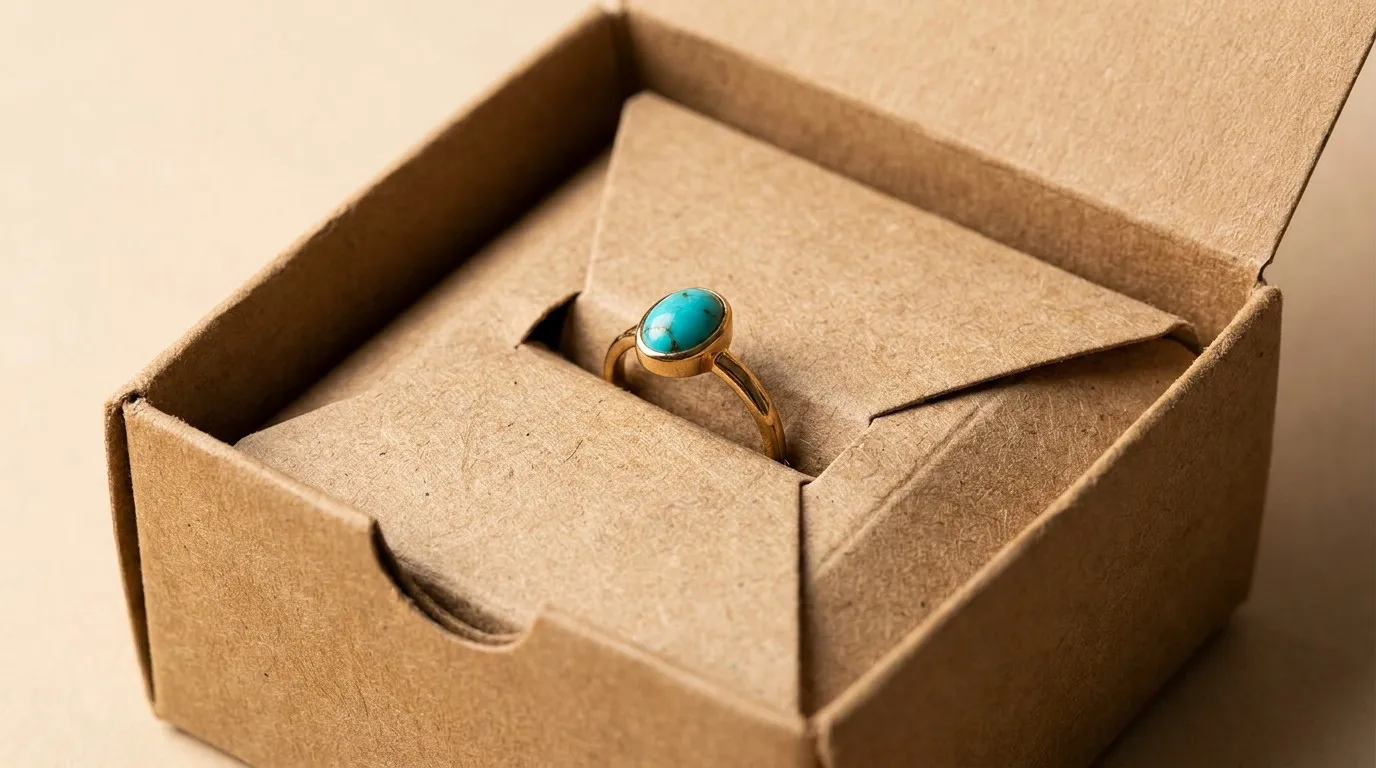
Precision engineering: By folding thick recycled cardstock, we create natural tension slots that hold heavy rings secure without a single drop of plastic foam or glue.
Saffron & Sage, a premium gold-vermeil jewelry brand based in New York, exported 60% of their collection to boutiques in Germany, France, and Denmark. Their signature packaging was a beautiful emerald-green rigid box. However, the box used a heavy plastic core, a magnetic flap closure, and a thick black polyurethane foam insert glued to the base.
In late 2025, during a routine compliance audit, their European distributor gave them a harsh warning: "Under the incoming PPWR rules, your boxes are classified as 'Non-Recyclable Composite Packaging.' Starting in 2026, we will face up to €10,000 in environmental penalties per shipment, and we cannot legally display your products unless you change your packaging."
The brand had less than 4 months to completely re-engineer their packaging line without losing their high-end "unboxing prestige" or blowing their margin.
The brand manager contacted Utouch Packaging with a desperate request: "Help us make our signature green boxes 100% recyclable, 100% plastic-free, and 100% compliant with the new EU PPWR, but it must still feel like a luxury item."
Our structural engineers took their original box apart and mapped out a three-stage transformation:
Core Transition: We replaced the heavy plastic inner frame with a 100% recycled greyboard frame (made from compressed post-consumer waste).
Insert Redesign: We designed a custom-folded 350 GSM unbleached kraft cardstock insert to replace the black polyurethane foam. We calibrated the folding angles to ensure the heavy gold vermeil rings remained perfectly upright during transport.
Closure Redesign: We eliminated the iron magnets and replaced them with a high-tension friction-fit lid that opens with a satisfying slide rather than a magnetic snap.
We manufactured their new boxes using 100% FSC-certified recycled paper. We used water-based soy inks for their signature emerald green color and replaced chemical-based laminations with a water-resistant clay coating that is fully compostable.
Saffron & Sage's transition to sustainable jewelry packaging was a massive commercial success:
Regulatory Compliance: The brand received a 100% "Grade A Recyclability Certificate" from their European compliance auditor, bypassing all customs delays and environmental surcharges.
Sales Velocity: By turning their packaging crisis into a marketing campaign — labeling their boxes as "100% Plastic-Free & Recyclable by Design" — their sales in Germany and Scandinavia shot up by 55% in the first quarter of rollout.
Logistical Efficiency: The new paper-core boxes were 25% lighter than the original plastic-core boxes, saving them over $8,000 in annual air freight costs.
Material Selection | PPWR Recyclability Grade | Biodegradation Period | Carbon Footprint (Relative) | B2B Unit Cost (Bulk) |
|---|---|---|---|---|
FSC Mono-Material Cardboard | Grade A (95% - 100% Recyclable) | 60 - 90 Days (Compostable) | Lowest (100% renewable) | $0.40 - $1.20 |
Starch-Based Bioplastic Pouch | Grade B (Compostable stream only) | 180 Days (Industrial compost) | Low | $0.50 - $1.00 |
Traditional Magnetic Composite Box | Grade D / F (Non-recyclable) | 50+ Years | Highest (Mixed polymers & metals) | $1.50 - $3.00+ |
Standard Recycled Paper Pouch | Grade A (95% Recyclable) | 30 - 45 Days | Very Low | $0.20 - $0.60 |
To achieve true environmental compliance, sustainable design must extend to the printing press. Traditional packaging utilizes petroleum-based inks, which release volatile organic compounds (VOCs) during the drying phase. These VOCs are harmful to factory workers, damage the atmosphere, and contaminate the water during the paper pulping and de-inking processes in recycling mills.
At Utouch Packaging, we have transitioned our custom printing lines to Vegetable-Based Soy Inks. Derived from renewable soybeans, these inks are not only biodegradable and completely non-toxic, but they also offer a distinct technical advantage: they contain zero volatile solvents and provide much brighter, more vibrant color saturation. Because soy ink is more stable, it spreads further on FSC textured papers, reducing overall ink consumption by 15% while ensuring that your brand's signature colors remain crisp, deep, and fully compliant with global chemical safety standards.
In traditional box manufacturing, chemical glues are used to bond the wrapping paper to the greyboard. These glues often emit trace amounts of volatile organic compounds (VOCs) that can accelerate silver tarnish inside the box, and they contaminate the paper recycling pulp.
At Utouch Packaging, we use an advanced Interlocking Joint Design for our eco-friendly rigid boxes. By using precision-milled tabs that snap into pre-cut slots in the cardboard frame, we can build a rigid, high-strength box without using a single drop of chemical glue. This "Glue-Free Joint" technology ensures:
Absolute Chemical Purity: No VOC emissions, ensuring your silver and gold remain bright and tarnish-free.
Flawless Recycling: The box breaks down naturally in water during the paper pulping process, leaving zero chemical residue behind.
Recyclable packaging can be collected, processed, and remade into new materials (like our FSC cardstock boxes). Biodegradable packaging breaks down naturally in the environment via microorganisms. For B2B jewelry brands, recyclable mono-materials are preferred under EU law, as municipal compost streams rarely accept thick cardboard jewelry boxes.
No. Modern sustainable design relies on "tactile luxury." By using thick, unbleached kraft papers, textured FSC cotton papers, and clean, deep blind embossing instead of shiny plastic laminations, you create a sophisticated, high-end look that resonates with modern, high-spending demographics.
To support growing brands in meeting environmental compliance, we have optimized our setup lines. Our MOQ for FSC-certified, mono-material cardboard boxes starts at just 500 units for standard sizes.
Yes. Modern hot foils are incredibly thin (less than 2.5 microns) and do not interfere with the repulping and recycling process of cardboard. You can still have a brilliant metallic logo while maintaining a Grade A recyclability rating.
We provide a certified invoice containing our FSC Chain of Custody registration number. You can verify this number directly on the official FSC database, giving you and your customs broker absolute compliance transparency.
The transition to sustainable jewelry packaging is more than an environmental obligation; it is a smart business decision. By auditing your materials, eliminating foam, and embracing mono-material paper engineering, you protect your brand from global compliance risks while tapping into the fastest-growing consumer demographic in the world.
At Utouch Packaging, we are pioneers in compliant, luxury-grade eco-packaging. Ready to audit your packaging line for the 2026 PPWR?Contact our Procurement Team for a 'Logistics-First' quote and sample kit today.
