
Views: 0 Author: Site Editor Publish Time: 2026-06-10 Origin: Site


The modern envelope pouch: Microfiber is the jeweler's preferred fabric for handling and protecting highly polished metals.
For high-end jewelry brands, the unboxing moment is a critical transition. It is the exact second your product transforms from an online image into a physical reality. If your customer opens their package only to find their highly polished silver band covered in microscopic textile dust, or worse, already showing yellow spots of oxidation, your brand trust evaporates instantly. This is why the microfiber jewelry pouch has transitioned from a niche choice to the industry standard for protective B2B packaging.
Microfiber is not just a soft fabric; it is an engineered material. Made of synthetic fibers measuring less than 1 denier (about 1/100th the thickness of a human hair), it has unique physical properties that natural cotton or traditional velvet cannot match. In 2026, as brands prioritize zero-defect fulfillment and high customer satisfaction scores, understanding the technical specifications of microfiber is essential for any smart procurement officer.
The primary reason jewelers have long used microfiber cloths to clean jewelry is that the material is 100% lint-free. Natural fibers like cotton and cheap wool velvets have a tendency to shed. Under the vibration of international shipping, these microscopic loose fibers rub off and stick to the metal, especially if the jewelry is static-charged from plastic mailers.
Premium microfiber jewelry pouches utilize split-weave polyester and polyamide blends. Because the fibers are continuous filaments rather than short natural staples, they do not break, pill, or shed. This ensures that when your customer slides a high-polished diamond ring or a delicate platinum band out of the pouch, the metal is absolutely pristine and free from dust particles that dull its natural refraction.
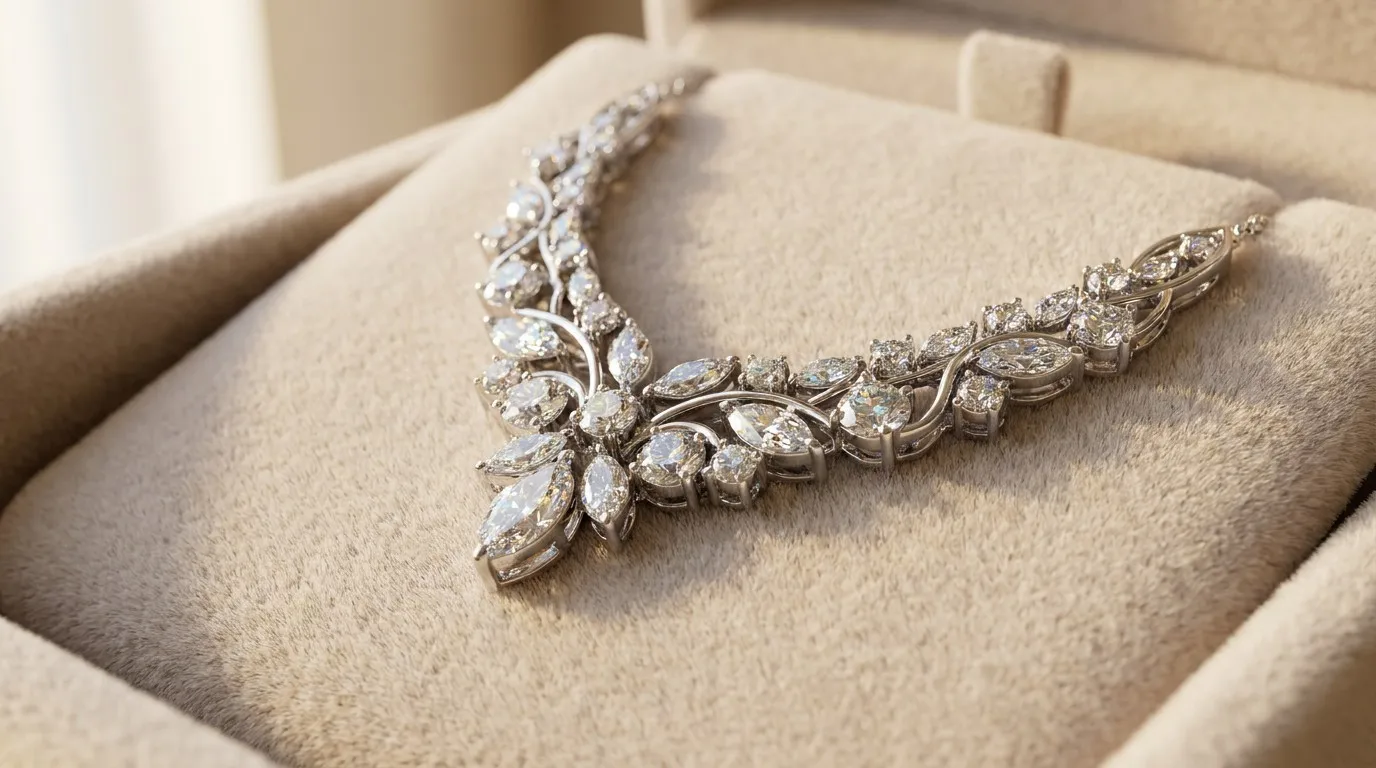
Macro precision: Microfiber filaments are so dense that they cushion the metal while capturing zero airborne dust or static-charged lint.
Sterling silver (.925) tarnishes when it comes into contact with hydrogen sulfide in the atmosphere, a process accelerated by ambient humidity. Velvet and cotton are highly hygroscopic — they naturally absorb moisture from the air. If your jewelry is stored in a velvet bag in a humid warehouse, the bag itself acts like a wet sponge, holding the moisture against the silver and causing it to turn yellow or black within weeks.
Microfiber is inherently hydrophobic. It does not absorb water into its inner fibers; instead, moisture is trapped in the microscopic capillaries between the fibers and evaporates rapidly. This moisture-wicking property keeps the interior environment dry. Additionally, the tight weave of microfiber acts as a physical barrier, significantly reducing the flow of ambient air (and sulfur gases) around the metal. Studies show that tight-fit microfiber envelope pouches can delay tarnish on silver by up to 50% compared to loose-knit velvet drawstrings.
Aura & Lace, an e-commerce brand based in San Francisco, CA, specialized in delicate, stackable sterling silver necklaces and highly polished vermeil rings. Their designs were intricate, featuring complex chain structures and tiny pave-set diamonds.
During their Q4 holiday rush, they began receiving a wave of customer complaints. Over 8% of customers reported that their necklaces looked "dirty," "dusty," or "scratched" out of the box. In reality, the rings weren't scratched — they were covered in microscopic black lint shed by their low-cost flocked velvet drawstring bags. Under the friction of truck and air transit, the velvet pile was breaking down, and static electricity was drawing the black dust into the tiny crevices around the pave diamonds.
Cleaning these intricate chains was nearly impossible for the end-consumer, leading to a spike in returns that cost the brand over $15,000 in return shipping and restocking fees during their most critical sales month.
The brand's founder contacted Utouch Packaging with a clear demand: "We need a fabric that is chemically clean, does not shed under friction, and keeps our silver bright."
Our quality control team analyzed their returned packages. We ran a series of Friction Simulator Tests (simulating 3,000 miles of road transit) comparing their flocked velvet bags against our 180 GSM Lint-Free Microfiber Suede. Under the microscope, the velvet showed massive fiber shed within 200 cycles, while the microfiber suede showed zero fiber loss even after 2,000 cycles.
We designed a customized packaging system tailored to their delicate items:
The Form: An 8x8cm envelope-style pouch with a secure snap button. The envelope design keeps the pouch flatter and tighter than a drawstring, minimizing internal movement during shipping.
The Material: 180 GSM high-density microfiber in a clean "Pale Sand" tone. We applied an anti-static wash to the fabric during the weaving process.
The Insert: A matching microfiber-wrapped card with specific slit-cuts to keep the delicate chains tensioned and flat, preventing tangling and friction.
Six months after transitioning to the Utouch microfiber envelope system, Aura & Lace reported remarkable results:
Defect Returns: Dust and tarnish-related return rates fell from 8.2% to under 1.2%, an 85% reduction.
Fulfillment Efficiency: The pre-packed microfiber inserts reduced their packing time by 18 seconds per order.
Customer Trust: Their customer review rating rose to 4.8 stars, with buyers specifically posting close-up unboxing photos showing the mirror-like finish of their gold vermeil rings.
In the luxury market, high-end houses like Tiffany & Co. or Cartier rarely use a box or a pouch in isolation — they use them together. This is known in B2B packaging circles as the "Double-Barrier Law."
The rigid outer box provides the structural armor that protects the jewelry from heavy drops during cargo shipping, while the snug-fitting microfiber inner pouch holds the piece secure and prevents it from rubbing against the box insert. When the end-consumer opens the box, they are greeted by a second, highly tactile layer of protection. This dual unboxing experience not only doubles the perceived value of the product but also provides the customer with a practical, long-term travel pouch they will keep in their handbag — ensuring your brand remains present in their daily life. Implementing this hybrid system is a proven way for growing jewelry lines to instantly elevate their market position.
Technical Spec | Lint-Free Microfiber | Standard Velvet | Flocked Cotton/EVA |
|---|---|---|---|
Fiber Composition | Continuous filament polyester/polyamide | Short-staple cotton/nylon pile | Sprayed nylon dust on foam |
Fiber Shed (Lint) | Absolutely Zero | Moderate-High (Breaks under friction) | Highest (Peels easily) |
Tarnish Protection | Excellent (Hydrophobic, dry seal) | Poor (Holds atmospheric moisture) | Very Poor (Chemical glues react) |
Logo Crispness (Foil) | Highest (Flat surface, no nap sink) | Good (Requires deep stamp pressure) | Low (Foil cracks on foam base) |
Anti-Static Properties | High (When treated with anti-static wash) | Low (Attracts dust via static) | Zero |
In low-cost microfiber pouches, the edges of the fabric are often sewn with cheap thread, which can fray and leave loose loops that catch on ring claws. At Utouch Packaging, we use High-Frequency Ultrasonic Heat-Sealing for our envelope pouches.
Instead of traditional needles and threads, ultrasonic waves melt the polyester edges of the microfiber together at a molecular level. This creates a seal that is:
Zero-Fray: The edges are fused, meaning there are no loose threads to tangle with jewelry.
Sleek & Minimal: The seam is incredibly thin and flat, matching the minimalist "modern luxury" aesthetic of high-end brands.
Ultra-Durable: The fused seam has a higher tensile strength than standard cotton thread, ensuring the pouch won't split open even if overpacked.
Yes. Microfiber is non-abrasive and softer than silk, making it completely safe for delicate organic gems like pearls, opals, and emeralds, which can be easily scratched by natural cotton fibers.
Yes. Faux microfiber can be hand-washed in warm water with mild detergent. Unlike velvet, which can lose its "direction" and stiffness when wet, microfiber retains its texture and structure completely after air drying.
Because microfiber is flat and dense, it accepts debossing (heat branding) and precision hot foil stamping better than almost any other fabric. It can capture much finer logo lines (down to 0.2mm thickness) than high-pile velvet.
Standard production for custom-logo microfiber pouches is 10-12 days after sample approval. We maintain massive rolls of stock colors in our Xiamen factory to ensure the fastest turnaround times in the B2B industry.
Yes. We can add a sewn divider inside the pouch to create two separate compartments. This is highly recommended for earring pairs or travel cases to prevent the pieces from scratching against each other during movement.
When you choose a Microfiber Jewelry Pouch, you are choosing an engineered solution. You are choosing a fabric designed specifically to protect highly polished metals, eliminate lint-shed, and maintain a dry, tarnish-safe environment. For the modern brand that values precision, zero returns, and contemporary aesthetics, microfiber is the only logical choice.
At Utouch Packaging, we specialize in high-precision microfiber production. Ready to see our ultrasonic heat-sealed edges in person? Contact our Procurement Team for a 'Logistics-First' quote and sample kit today.
