
Views: 0 Author: Site Editor Publish Time: 2026-06-26 Origin: Site


Navigating the global supply chain for high-end branding requires more than a simple price comparison. Selecting the right custom jewelry packaging supplier is a technical audit of quality management systems, material traceability, and structural engineering capabilities. This 2026 guide provides B2B procurement managers with a 10-point audit checklist—from ISO 9001 certification and AQL 0.65 sampling standards to EU PPWR compliance and VOC-free adhesive protocols. Featuring a deep case study on how a European distributor stabilized a multi-national retail rollout through a factory-direct pivot, this article offers the professional framework needed to secure a reliable, zero-defect supply chain for luxury jewelry brands.
Industrial Strength: A world-class supplier should demonstrate a high level of automation and organized quality management at every stage of the manufacturing cycle.
In the jewelry packaging sector, 80% of wholesale procurement disputes are not caused by bad intent, but by inadequate technical auditing. Many brands choose a custom jewelry packaging supplier based solely on high-resolution sample photos or the lowest unit quote. However, a sample produced by hand in a boutique studio is fundamentally different from a mass-production run of 50,000 units.
Without a rigorous technical checklist, brands often face "Quality Drift" — where the first batch is perfect, but the fourth batch arrives with misaligned logos, peeling edges, or chemical odors that tarnish the jewelry. In 2026, as environmental regulations like the EU PPWR become more aggressive, the cost of choosing an unvetted supplier can include heavy fines and product recalls. Success requires moving beyond "Supplier Selection" and toward "Supplier Integration."
How do I verify if a supplier is a real factory or a middleman? Professional B2B buyers request ISO 9001 and FSC Chain of Custody certificates, alongside recent audit reports from 3rd-party inspection firms like SGS or Intertek.
What quality standard should I expect for luxury jewelry boxes? The industry benchmark for major defects is AQL 0.65. This ensures that batch consistency remains high across tens of thousands of units.
Does the manufacturer have a dedicated structural engineering team? A top-tier supplier should provide technical CAD blueprints with millimeter-precise tolerances before production begins.
Are the adhesives and inks safe for precious metals? Leading manufacturers utilize zero-sulfur and neutral pH adhesives to prevent the oxidation of silver and gold-plated jewelry.
While "Budget" suppliers offer unit prices that are 20-30% lower than the market average, the Fully Landed Cost is often much higher. Hidden costs of unvetted suppliers include:
Lead-Time Volatility: Trading companies often lose their spot in the factory queue, leading to 15-day delays that can ruin a product launch.
Material Shortcuts: Using 800 GSM greyboard instead of the requested 1200 GSM reduces crush-resistance, leading to transit damage.
Administrative Overhead: Managing a low-quality supplier requires 3x more labor from internal QC and procurement teams.
Professional procurement teams utilize a standardized gating logic when evaluating a new custom jewelry packaging supplier:
ISO 9001:2015 Certification: Verifying that the factory has a documented Quality Management System.
FSC Chain of Custody: Essential for verifying that paper sources are sustainably managed and compliant with global environmental laws.
V-Grooving Capability: Confirming the supplier has automated CNC V-grooving machines to ensure sharp 90-degree corners on rigid boxes.
AQL Sampling Protocol: Explicitly agreeing on AQL 0.65 for major and 1.5 for minor defects in the purchase agreement.
Anti-Static Pouch Processing: For microfiber and velvet items, verifying the fabric has been treated with anti-static washes to prevent dust attraction.
Laser-Guided Logo Registration: Ensuring the branding lines use high-speed cameras to center the logo perfectly on every box.
Chemical Safety Testing: Requesting REACH and California Proposition 65 reports for all glues, inks, and foams.
Structural Stress Testing: Does the factory have internal vibration and drop-test equipment?
Lead-Time Stability: A 3-year history of "On-Time-In-Full" (OTIF) delivery metrics.
Raw Material Locking: The ability to reserve material batches for large annual contracts to prevent color variance.
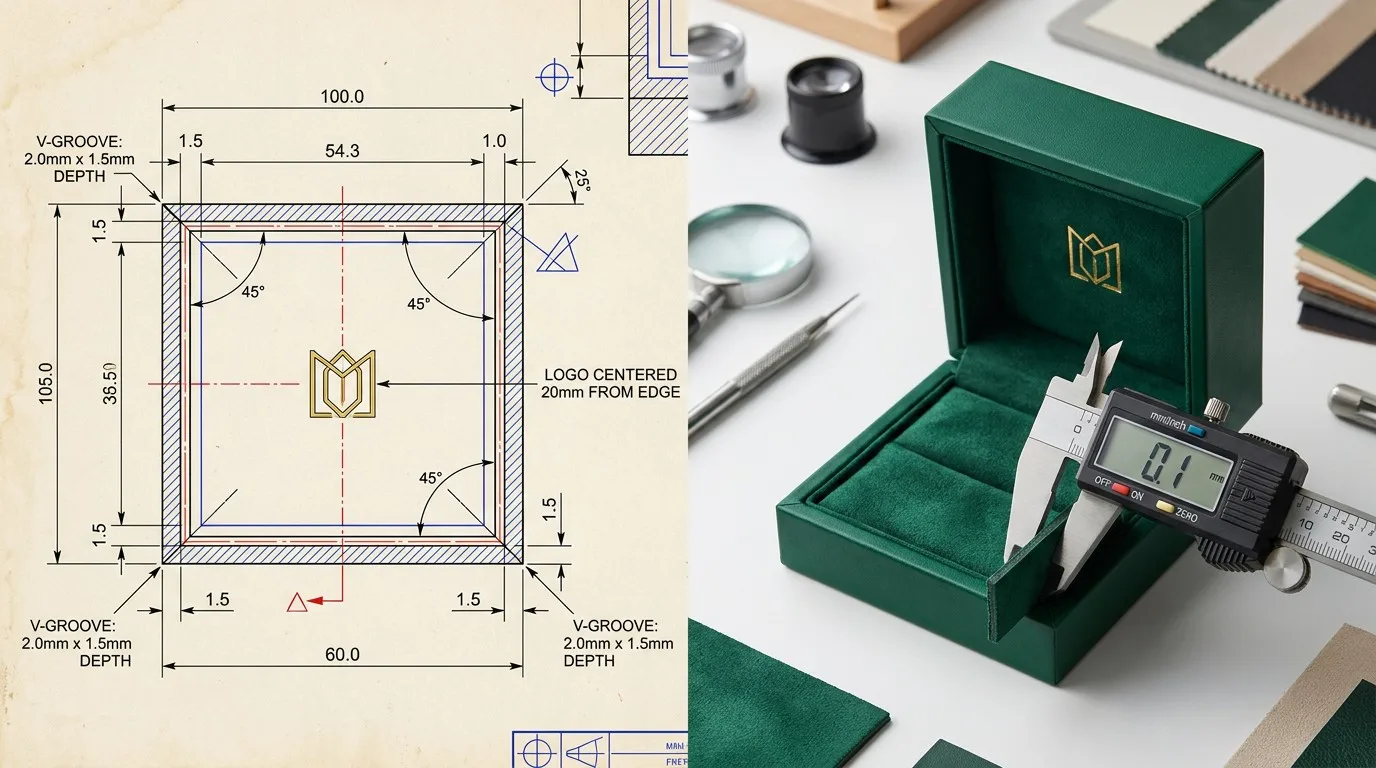
Solution Product Composition: Technical transparency is the bridge to trust. A world-class supplier provides precise engineering drawings that define V-groove depth, hinge tension, and logo registration to within 0.1mm before the first machine is turned on.
To move from a B-grade to an A-grade supply chain, industry veterans recommend the "Pilot-to-Scale" model:
The Pilot Run: Start with a 500-unit "Trial order" to test the factory's real-world mass-production QC. Do not rely on hand-made sales samples.
The Golden Sample: Once the pilot is approved, create a "Golden Sample" set — one for the factory QC floor and one for the client's office. Both must be signed and dated to act as the legal quality benchmark.
Factory-Direct Communication: Eliminate the middleman. Establish a direct technical channel with the factory's production manager to discuss material specs and design updates. Professional B2B buyers often utilize verified manufacturer portals like the Alibaba International Shop to verify capacity.
Nordic Luxe, a high-volume jewelry distributor supplying 300 retail locations across Europe, was sourcing custom rigid boxes through a Copenhagen-based trading house. For the first two orders, the quality was acceptable. However, during a massive seasonal rollout, the quality "Decayed." Over 15% of the boxes arrived with misaligned hinges that wouldn't close, and 10% showed visible glue residue on the velvet lining. The retailers refused to display the jewelry, leading to a projected €200,000 loss in seasonal sales.
The procurement director conducted a physical audit of the actual manufacturing source in Asia. It was discovered that the trading company had shifted production to a low-tech "overflow factory" that lacked automated V-grooving and used manual gluing methods. There was no documented QC process and no ISO certification. The original "high-end" factory shown in the sales photos was not the one producing the bulk order.
The brand manager transitioned the account to a technically audited primary manufacturer. A Strict Gating Program was implemented:
Certification Audit: The manufacturer provided full ISO 9001 and FSC CoC documentation to the compliance team.
Structural Re-engineering: The necklace box was redesigned with a reinforced spine and vacuum-fit lid to eliminate the hinge issues.
AQL 0.65 Implementation: Every batch was put through a 48-hour "Open-Air Degassing" phase followed by a 100% surface inspection before sealing.
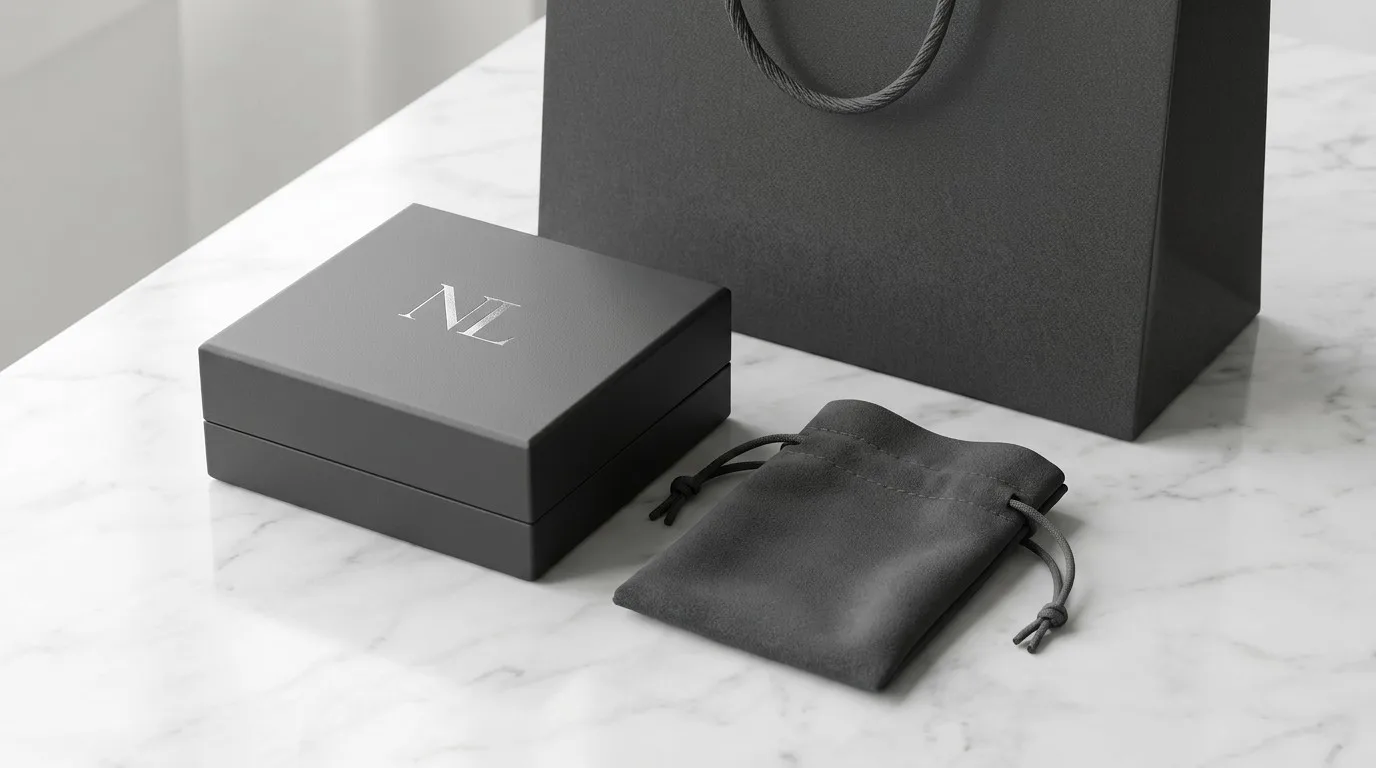
Design Deliverable: The final Nordic Luxe suite. By choosing a factory-direct supplier that adheres to technical audit standards, the brand achieved a zero-defect rollout across 300 stores, restoring their market authority and increasing retail re-order frequency by 40%.
Six months after switching to a technically audited custom jewelry packaging supplier:
Defect Rate: Major defects fell from 15% to 0.3%.
Lead-Time Stability: Production times were locked at 22 days, with 100% on-time delivery for the summer season.
Operating Margin: By removing the trading company's 20% commission and reducing return rates, Nordic Luxe improved their packaging-related ROI by 32%.
For the EU market, FSC (Forest Stewardship Council) and GRS (Global Recycled Standard) are essential. Procurement teams should also request REACH compliance reports for all chemical components (glues, dyes, and coatings) to ensure the safety of precious metals.
Request a live video tour of the production floor during a production run. A true manufacturer will show the V-grooving lines, foil stamping presses, and QC stations. Verification of the business license is also critical; it should explicitly include "Manufacturing" or "Production" in the legal scope.
A reliable factory typically requires 15 to 25 days for production, plus shipping. If a supplier promises under 7 days for a large custom order, they are likely taking shortcuts in the adhesive curing or degassing processes.
Yes. A-grade suppliers maintain in-house structural engineering teams. They should be able to provide a physical white-sample (unprinted) for size testing within 3-5 days of receiving a technical brief.
The Purchase Agreement should include an "AQL Gating Clause." If a 3rd-party inspection report shows that defects exceed the agreed AQL level (e.g., AQL 0.65), the manufacturer should be contractually obligated to perform 100% re-inspection and replacement at their own cost.
Choosing a custom jewelry packaging supplier is the single most important decision in a brand's physical supply chain. In 2026, the brands that dominate are those that prioritize technical auditing over the "lowest price." By using a rigorous 10-point checklist and choosing factory-direct partners with verified engineering standards, brand owners protect their jewelry, their reputation, and their profit.
Verified manufacturing partners welcome the audit. Ready to see industrial ISO and AQL protocols in action? Contact a specialized Technical Team for a consultation and a certified sample kit today.
