
Views: 0 Author: Site Editor Publish Time: 2026-07-04 Origin: Site


TL;DR: A Modular Jewelry Packaging System is a strategic B2B framework where a brand utilizes a standardized set of core box structures and interchangeable inserts to accommodate diverse SKU catalogs (rings, earrings, necklaces, etc.). For wholesale buyers in 2026, this system is the key to maintaining 100% brand consistency across global retail channels while reducing raw material waste, simplifying inventory management, and achieving a 25-30% improvement in total supply chain ROI.
Pillars of a Modular System:
✅ Structural Standardization: Reducing the number of unique box dimensions across the entire brand catalog.
✅ Interchangeable Inserts: Utilizing precision-cut microfiber or velvet inserts that fit a single "Universal Master Box."
✅ Material Consolidation: Locking high-volume contracts for a single FSC-certified material to eliminate batch-to-batch color drift.
✅ Logistical Optimization: Designing box dimensions that maximize pallet density and reduce volumetric air freight costs.
A modular jewelry packaging system is a technical B2B sourcing strategy that prioritizes "Platform Thinking" over individual SKU design. Instead of creating a bespoke box for every new jewelry item, brands develop a cohesive family of standardized outer shells—typically in small, medium, and large footprints—paired with a versatile library of internal inserts. This engineered approach ensures that as a jewelry house scales from 10 to 500 SKUs, the physical branding remains 100% unified, material waste is eliminated, and procurement efficiency is maximized.
The Power of Unity: Modular systems allow brands to manage extensive product lines with just a handful of master box dimensions, ensuring perfect visual harmony on the retail shelf.
In the rapid-scale phase of a jewelry brand, the biggest threat to profitability is "SKU Fragmentation." For every new earring set or unique necklace length launched, procurement teams often default to designing a new custom box. By the time a brand reaches 100 SKUs, they are managing 20+ different box sizes, multiple material batches from different suppliers, and an inventory of mismatched inserts. For a wholesale buyer, this fragmentation leads to higher Minimum Order Quantities (MOQs), volatile quality control, and a "broken" unboxing narrative where the ring box doesn't match the necklace box.
In 2026, the administrative cost of managing supply chain complexity can erode up to 15% of a brand's net profit. Modular Packaging Systems solve this by shifting the focus from "The Box" to "The System." By auditing the physical footprint of the entire jewelry catalog, brands can consolidate their volume into fewer master sizes, triggering higher volume discount tiers and stabilizing their brand identity across every global retail touchpoint.
How many box sizes do I actually need for a full brand rollout? Most professional B2B brands follow the "Golden Three" rule: one small (rings/earrings), one medium (pendants/bracelets), and one large (necklaces/luxury sets).
Does a modular system look "cheap" or generic? No. Modularity is a structural efficiency, not an aesthetic limitation. You can still use ultra-premium materials like lacquered wood or FSC specialty papers, but within standardized dimensions that optimize manufacturing speed.
How do I handle custom jewelry shapes in a modular box? The secret lies in the "Technical Insert." By using precision CNC-cut microfiber inserts, a single 9x9cm box can be configured to house a heavy pendant, a pair of hoop earrings, or a set of cufflinks with equal security.
The foundation of a high-ROI modular system is the Master footprint Matrix. This involves auditing your entire catalog and grouping products by their maximum dimensions. Standardizing on common footprints like 6x6cm, 9x9cm, and 12x12cm covers 98% of most jewelry categories.
By using fewer unique sizes, you allow the factory to run automated CNC V-grooving lines for longer cycles, which reduces labor-related unit costs by 20%. Furthermore, your shipping mailers and display trays can be pre-configured for these exact sizes, creating a "Lego-like" efficiency in your logistics chain. Explore our library of standardized B2B footprints at our Alibaba International Shop.
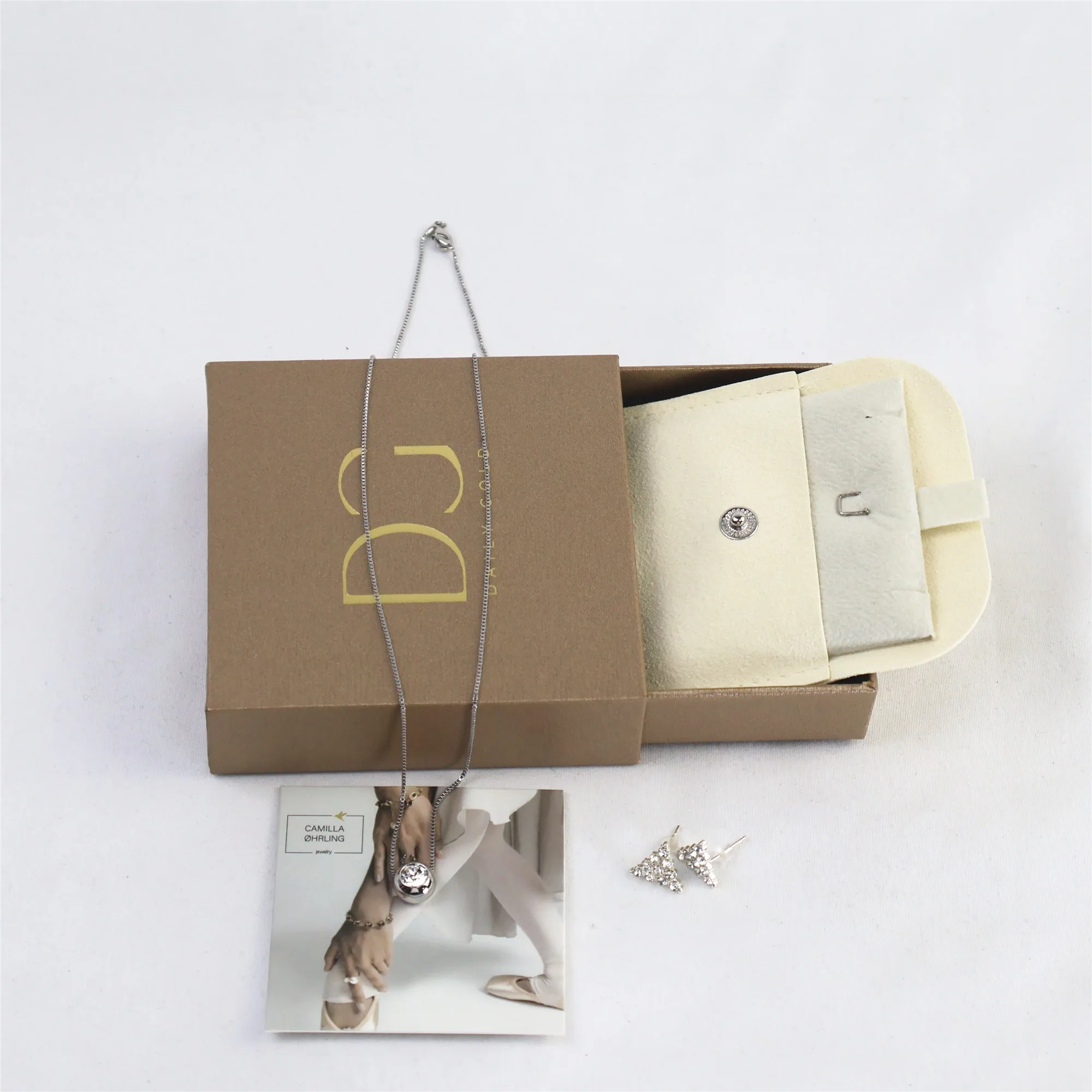
The Engineering of Adaptation: Drawer-style modular boxes paired with universal inserts allow wholesale buyers to respond to market trends instantly without redesigning the outer packaging.
In 2026, the use of high-density microfiber with Universal Multi-Cuts is the primary driver of modularity. A single insert can be engineered with an "H-slit" for rings, "C-hooks" for necklaces, and stud perforations. This allows a wholesale buyer to order 10,000 units of the "Universal Insert" and use them across 50 different SKUs. This consolidation reduces storage space requirements by 60% and ensures that every item in your collection is presented with the same tactile luxury.
The Challenge: Vera & Vine, a fast-growing demi-fine jewelry brand, was managing 15 different box sizes from three different vendors. The lack of material locking led to a 10% color variance between batches, damaging their high-end brand perception. Their warehouse was overflowing with mismatched box inventory that didn't fit their standard shipping mailers.
The Optimization: We transitioned them to a Tri-Tier Modular System. We reduced their box footprints from 15 sizes down to 3. We implemented "Material Locking" for a single batch of Matte Sand FSC paper. Finally, we designed a single "Universal Microfiber Insert" that could adapt to their entire earring and pendant collection.
The Result: The brand achieved a 100% visual match across all global SKUs. By consolidating their volume into just three sizes, they moved from a 1,000-unit price tier to a 5,000-unit tier, dropping their unit cost by 32%. Most importantly, their retail display became a unified brand statement, leading to a 25% increase in multi-item purchases at their flagship boutiques.
For brands operating on a global scale, we recommend the "Hub-and-Spoke" Wholesale Model, as detailed in our 2026 Wholesale Strategy Guide. In this model, the "Hub" (the master boxes) is sourced in extremely high volume (12-month supply) to secure the lowest price, while the "Spokes" (the specific inserts or branded sleeves) are ordered in smaller, more agile batches. This balance provides the economic stability of a large wholesaler with the agility of a D2C startup.
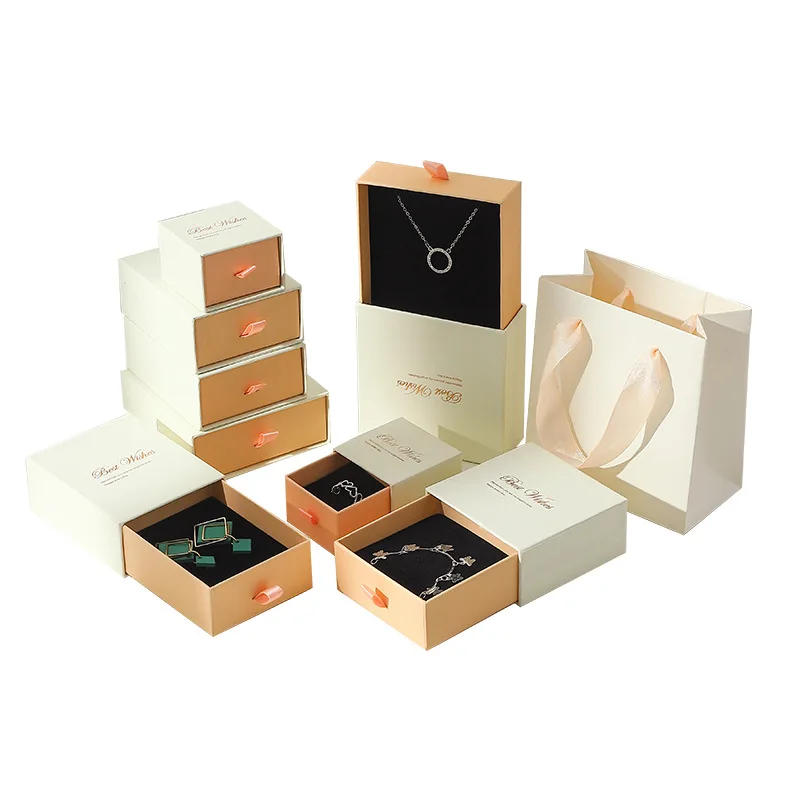
Logistical ROI: Standardized dimensions enable perfect stacking and palletization. Modular systems ensure that you never pay to ship "Air," maximizing the efficiency of your international sea and air freight.
On the contrary, modularity provides the financial savings needed to invest in better finishes. By saving money on tooling and logistics, brands often upgrade to higher-grade specialty papers, 3D foil embossing, or custom magnetic closures while staying within the same total budget.
Yes. We recommend a "Phased Migration." Start by standardizing your top-selling 20% of SKUs—which usually represent 80% of your volume—into the modular hub. As the stock of your low-volume items depletes, migrate them into the standardized footprint.
Most B2B jewelry brands realize a 25-30% improvement in total landed ROI within the first year, driven by lower per-unit costs, reduced warehouse overhead, and zero return rates due to color mismatched sets.
In the competitive 2026 jewelry market, the most successful brands are those that treat their packaging as a Scalable Asset. A modular packaging system is more than just a box; it is an engineered solution that protects your product, clarifies your brand identity, and optimizes your margins. By prioritizing system design over individual units, you build the foundation for global retail excellence.
Utouch Packaging specializes in engineered modular systems for global B2B jewelry brands. Ready to unify your unboxing experience? Contact our System Design Team for a Modular Supply Chain Audit and custom quote today.
