
Views: 0 Author: Site Editor Publish Time: 2026-06-28 Origin: Site


Navigating the complex landscape of material science is the foundation of world-class branding. This 2026 jewelry packaging materials guide provides B2B procurement managers with a technical deep dive into the chemical and physical properties of the industry's most critical substrates—from high-density FSC papers and anti-tarnish microfibers to biodegradable plant-pulp inserts. Featuring a detailed case study on how "Aura Heritage" reduced inventory tarnish rates by 85% through neutral-pH material selection, this comprehensive wiki offers the data-driven framework needed to match material performance with product value and regulatory compliance in the digital-first retail era.
Material Authority: Sourcing modern jewelry packaging is an audit of texture, density, and chemical stability. Choosing the right material grade is the first step in protecting your brand's reputation.
In the luxury jewelry sector, 60% of product quality issues — such as oxidation, tarnishing, and microscopic surface scratches — are traced back to the chemical composition of the packaging. Many brand owners select a Jewelry Packaging Materials Guide based purely on aesthetics, ignoring the "Reactive Chemistry" between the metal and the container.
Standard industrial papers often contain sulfur-based bonding agents, while low-cost adhesives can emit acidic vapors as they cure. Over a 30-day ocean shipment, these gases become trapped inside the box, reacting with .925 sterling silver or 14k gold-plated jewelry to create permanent tarnish spots. In 2026, as brands scale globally, the cost of a "Material Failure" includes not only replacement product but also the loss of trust from premium retail partners. Successful brands move beyond the "pretty box" and treat their packaging as a protective micro-environment.
What is the best material to prevent silver tarnish? High-density microfiber treated with a neutral-pH anti-static wash is the industry standard. It creates a physical barrier while ensuring no sulfur-rich fibers touch the metal.
Is velvet or suede more durable for travel pouches? Premium faux suede (microfiber suede) is technically more durable than velvet as it does not "shed" fibers and is highly resistant to pilling and crushing during long-term storage.
What does "Mono-Material" mean for jewelry boxes? It refers to packaging made from a single material family (e.g., 100% paperboard), which is required for Grade A recyclability under the new EU PPWR regulations.
Are plastic foam inserts being banned? While not universally banned, many high-end retailers now demand "Zero-Plastic" alternatives like folded FSC cardstock or molded sugarcane bagasse pulp.
To optimize ROI, B2B buyers must weigh the "Cost per Unit" against the "Margin Protection" of each material tier:
Entry-Tier (SBS Cardboard): Most cost-effective, ideal for high-volume fashion jewelry. Offers high-resolution print quality but low structural "Heritage Feel."
Mid-Tier (Textured Specialty Papers): The "Sweet Spot" for demi-fine brands. Linen and pebble textures hide fingerprints and provide a premium tactile response.
Luxury-Tier (Nappa PU & Silk Velvet): The highest "Perceived Value" multiplier. These materials justify a $200+ retail price point but require higher MOQs and specialized manual finishing.
B2B Technical Note: Many suppliers offer "Recycled Kraft" at a discount, but not all kraft is equal. Low-grade recycled paper has a lower "Burst Strength" (Mullen Test), leading to crushed corners during stacking. At Utouch Packaging, we only utilize FSC-certified 450 GSM reinforced kraft to ensure 100% transit safety.
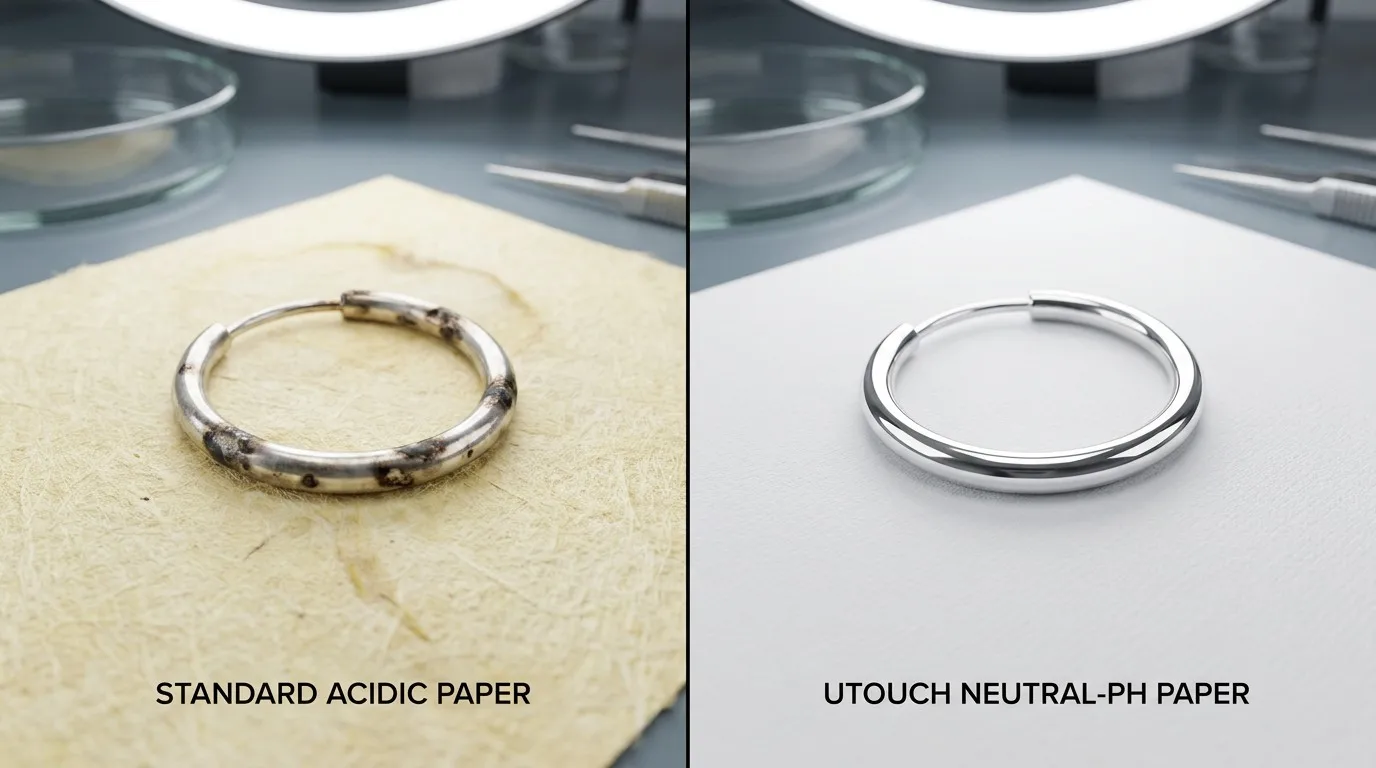
Solution Product Composition: Material safety is a science. Our neutral-pH, sulfur-free specialty papers (RIGHT) prevent the 'Yellowing' reaction commonly seen in standard acidic papers (LEFT), ensuring your inventory arrives in 'Showroom Ready' condition even after months of warehouse storage.
Professional designers utilize a "Layered Material" approach, selecting specific substrates for the Outer Shell, the Branding Canvas, and the Product Cradle:
Greyboard (Industrial Core): 1000 - 1200 GSM recycled chipboard provides the crush-resistance required for air and sea freight.
Rigid PU Frames: Used for heirloom-quality boxes to provide a "Solid" opening sound and permanent structural memory.
Dyed-Through Art Paper: Essential for sharp V-grooved edges. Because the paper fiber itself is colored (e.g., Deep Black), no white "Join-Lines" appear at the corners of the box.
Soft-Touch Aqueous Coatings: A microscopic biodegradable film that provides a "Peachy" velvet feel to standard paper, increasing conversion rates for modern minimalist brands.
Molded Sugarcane Bagasse: The 2026 leader in eco-luxury inserts. It is 100% plastic-free, compostable, and can be molded to the exact geometry of a necklace or ring.
High-Pile Microfiber: 180 - 220 GSM microfiber provides a "Vacuum-Grip" for high-polished silver, capturing zero dust and capturing 100% of the customer's tactile attention. You can verify our full material spec sheets at our Alibaba International Shop.
Top-tier manufacturers recommend Material Fusion — the intentional mixing of textures to create depth. For example, a raw, unbleached kraft box paired with a high-gloss silk drawstring pouch creates a "Wabi-Sabi" luxury aesthetic that is highly shareable on social media. This contrast between "Rough" and "Smooth" signals to the customer that every material choice was an intentional design decision, further justifying a premium price point.
Aura Heritage, a London-based brand specializing in high-polished vermeil (gold over silver) jewelry, faced a devastating inventory crisis in late 2025. Over 12% of their orders were being returned because the jewelry appeared "Cloudy" or "Dull" upon opening. The brand initially blamed their polishing team, but even after re-polishing, the issue recurred. Their "Star Seller" status was at risk, and their replacement shipping costs were exceeding £10,000 per month.
The brand manager contacted a technical manufacturing expert to conduct a Chemical Compatibility Audit. They discovered that the brand's "Luxury Blue" wrapping paper was sourced from a low-cost mill that utilized sulfur-based bleaching agents. Furthermore, the adhesive used to bond the velvet to the foam insert was releasing acidic VOCs. Under the microscope, these chemicals were shown to be "micro-pitting" the silver surface, destroying its luster within just 14 days of being boxed.
The account was transitioned to a factory-direct manufacturer specializing in Chemical Purity Standards:
Paper Transition: Replaced the acidic blue paper with a neutral-pH, dyed-through specialty paper from an FSC-certified mill.
Lining Upgrade: Moved from cheap nylon velvet to a 220 GSM Anti-Static Microfiber that had been lab-tested for sulfur-zero compliance.
Adhesive Engineering: Switched to a water-based, VOC-free heat-bonding adhesive that leaves no chemical residue.
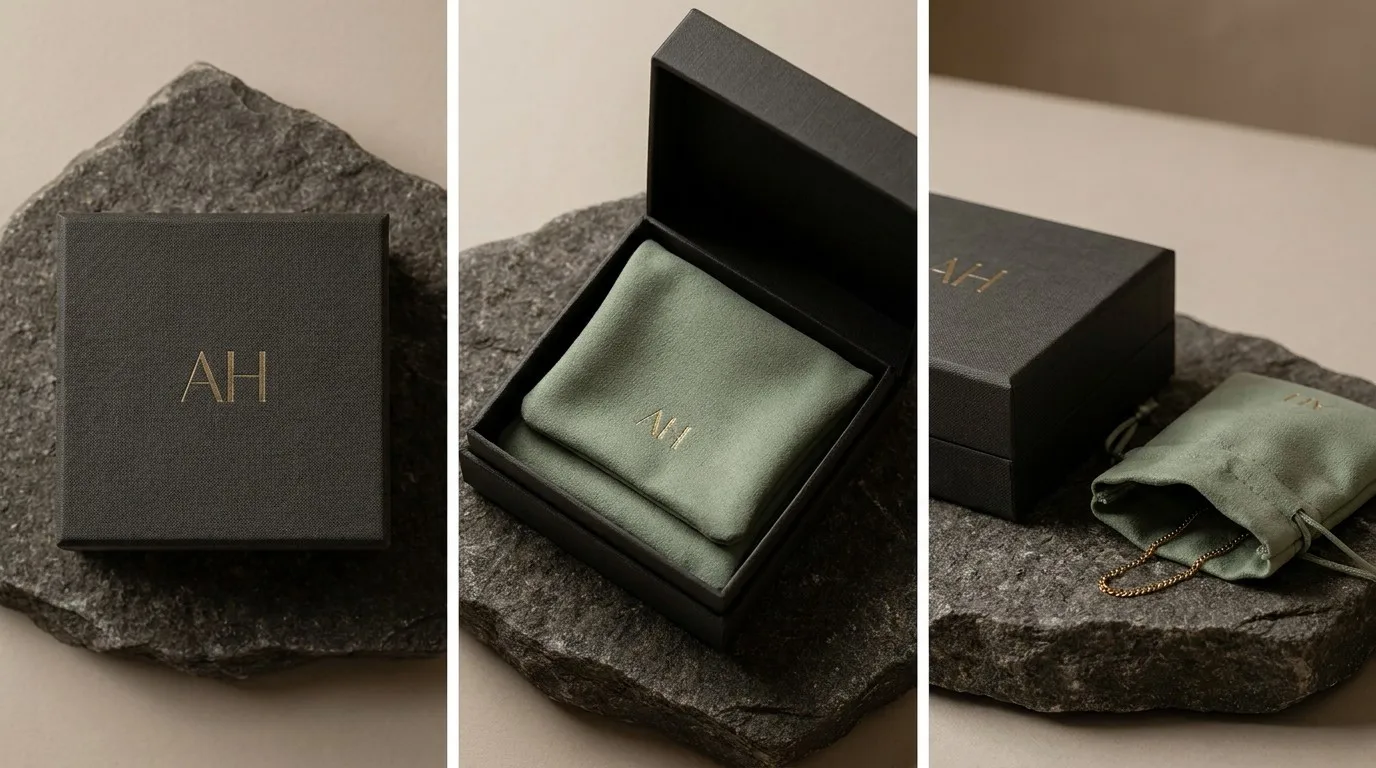
Design Deliverable: The final Aura Heritage suite. By focusing on the 'Chemical Integrity' of the materials, the brand eliminated tarnish-related returns entirely and achieved a 4.9-star unboxing rating across its global retail network.
Six months after the material overhaul, Aura Heritage reported:
Tarnish-Related Returns: Fell from 12.4% to Zero.
Customer Retention: Increased by 28%, with customers specifically praising the "clean and high-end feel" of the microfiber linings.
Storage Life: Inventory can now be stored for up to 18 months without showing any signs of yellowing or oxidation.
Material Type | Tarnish Safety | Tactile Luxury Score | PPWR Recyclability | B2B Cost Efficiency |
|---|---|---|---|---|
FSC Specialty Paper | Excellent (Neutral-pH) | High (Textured) | Grade A (95%) | High |
Lint-Free Microfiber | Highest (Non-Reactive) | Very High | Grade C (Requires rPET) | Moderate |
High-GSM Silk Velvet | Moderate (Pile-dependent) | Highest | Low | Premium |
Bagasse (Plant Pulp) | Excellent | Moderate (Organic) | Grade A (Compostable) | High (at volume) |
Standard PU Leather | Poor (Chemical odors) | High | Grade F (Non-recyclable) | Moderate |
True anti-tarnish materials are either chemically inert (Neutral pH) or have been treated with a "corrosion inhibitor" that traps sulfur molecules. Always request a Silver Rub Test Report from your supplier before ordering bulk quantities for sterling silver jewelry.
No. In 2026, many of the world's most expensive specialty papers are made from 100% recycled fibers. The "Cheap" look comes from low-GSM weight and poor finishing. A 1200 GSM recycled greyboard box wrapped in a heavy-weight recycled art paper with a soft-touch coating is indistinguishable from virgin material.
For humid regions (like Florida or Southeast Asia), Synthetic Microfiber is superior to natural cotton or velvet. Microfiber is hydrophobic and does not trap moisture against the metal, preventing the "warehouse tarnish" that ruins many retail collections.
Yes. This is the definition of Material Fusion. It is the most effective way to combine structural protection (the paper box) with a premium user touchpoint (the inner fabric pouch or pad).
Your manufacturer must provide a certified invoice containing their unique FSC License Code. This code allows you to trace the paper back to the responsibly managed forest where it was sourced.
The jewelry packaging materials guide for 2026 teaches us that luxury is no longer just skin deep. It is a technical integration of aesthetics, chemical safety, and environmental compliance. By choosing substrates that protect your metal and resonate with your audience's values, you transform your packaging from a cost center into a powerful engine of brand loyalty.
At Utouch Packaging, we are masters of material science. Ready to see our 'Chemical-Zero' swatches in person? Contact our Material Engineering Team for a consultation and a certified swatch kit today.
