Views: 0 Author: Site Editor Publish Time: 2026-05-28 Origin: Site


For a small or emerging jewelry brand, packaging is often the first physical touchpoint a customer has with your business. In the B2B world of jewelry packaging, the transition from "generic" to "custom" is a critical milestone. However, small brands face a unique set of challenges: balancing high-end aesthetics with low Minimum Order Quantities (MOQs) and managing limited storage space while maintaining a "luxury" feel.
In 2026, the jewelry market is more crowded than ever. Whether you are selling on Etsy or launching a standalone Shopify store, your packaging must work twice as hard to justify your price point. This guide explores the essential materials, sourcing strategies, and cost-saving tips specifically designed for small-scale jewelry entrepreneurs.
The "feel" of your packaging conveys more about your brand value than any marketing copy. For small brands, choosing one or two "hero" materials is better than a fragmented collection.
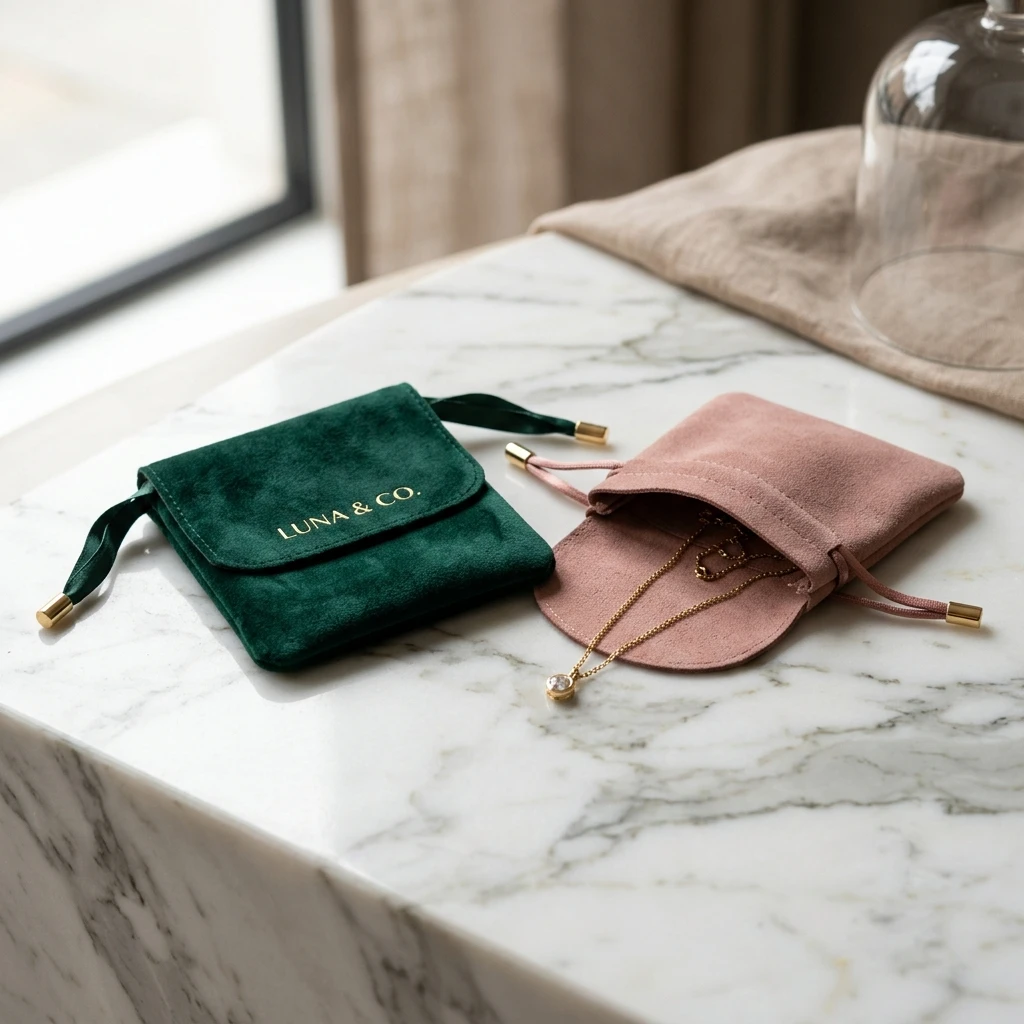
Pouches are the most versatile packaging for small brands because they are lightweight (reducing shipping costs) and require minimal storage.
Velvet (The Classic Luxury): High-sheen velvet is synonymous with traditional luxury. It provides a rich, deep color (like Emerald or Royal Blue) and a heavy "drape."
Best for: Gold jewelry, vintage-style brands, and gift-heavy seasons.
Suede/Microfiber (The Modern Minimalist): Suede-effect microfiber is the "it" material for 2026. It is matte, soft-touch, and offers superior protection against scratches. It feels modern, clean, and understated.
Best for: Contemporary silver jewelry, minimalist brands, and daily-wear collections.
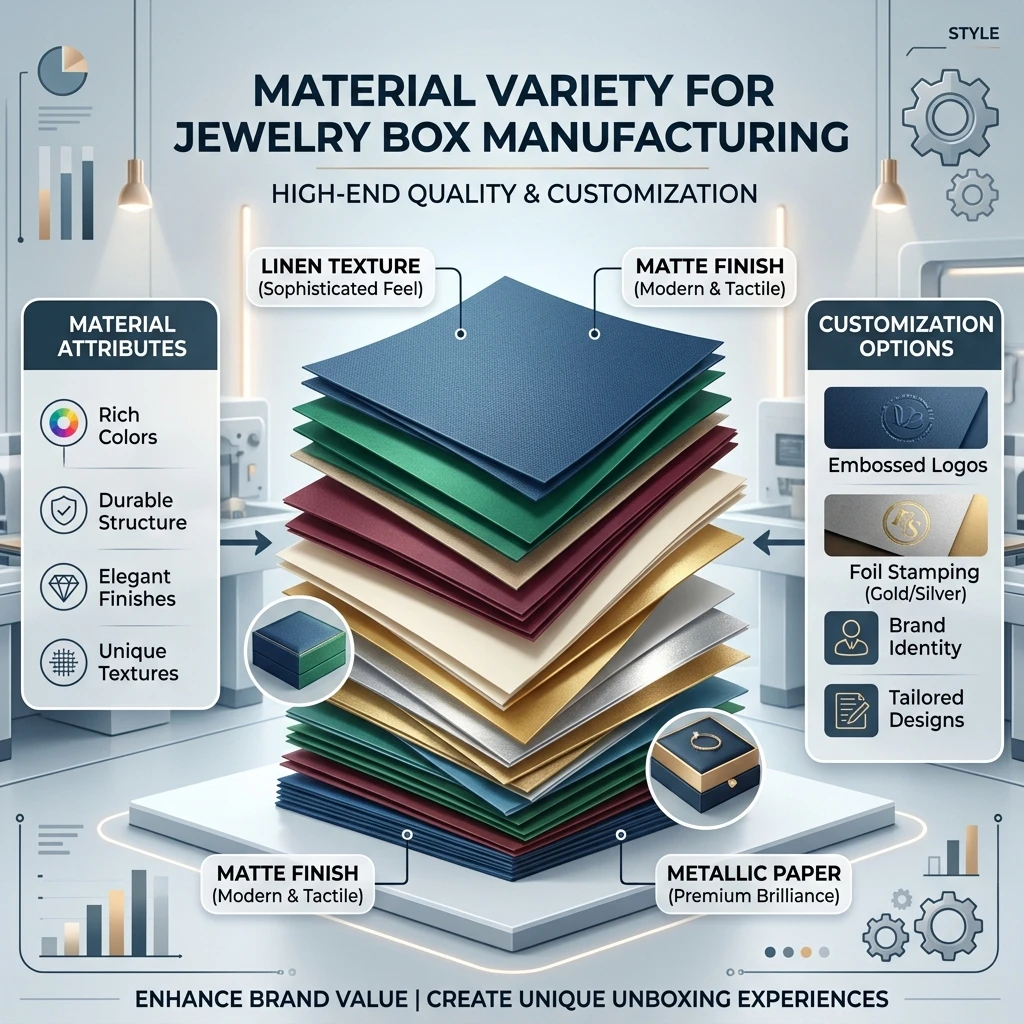
If you are investing in boxes, the paper choice is paramount.
GSM (Grams per Square Meter): For a rigid jewelry box, you want a 120-150 GSM wrapper over a 1000-1200 GSM greyboard. This ensures the box doesn't feel "flimsy."
Texture: Linen-textured or pebble-grain paper hides fingerprints and minor shipping scuffs better than flat matte paper.
One of the biggest hurdles for small brands is the "MOQ Wall." Most factories have high minimums for fully custom shapes. Here is how to navigate it:
Instead of a 100% custom-sized box (which might require an MOQ of 2,000), use a Standard Size Box but with a Custom Insert.
The Logic: Factories keep thousands of standard "stock" box shells in white or black. By only customizing the internal foam or microfiber insert, you can often lower your MOQ to 300–500 pieces.
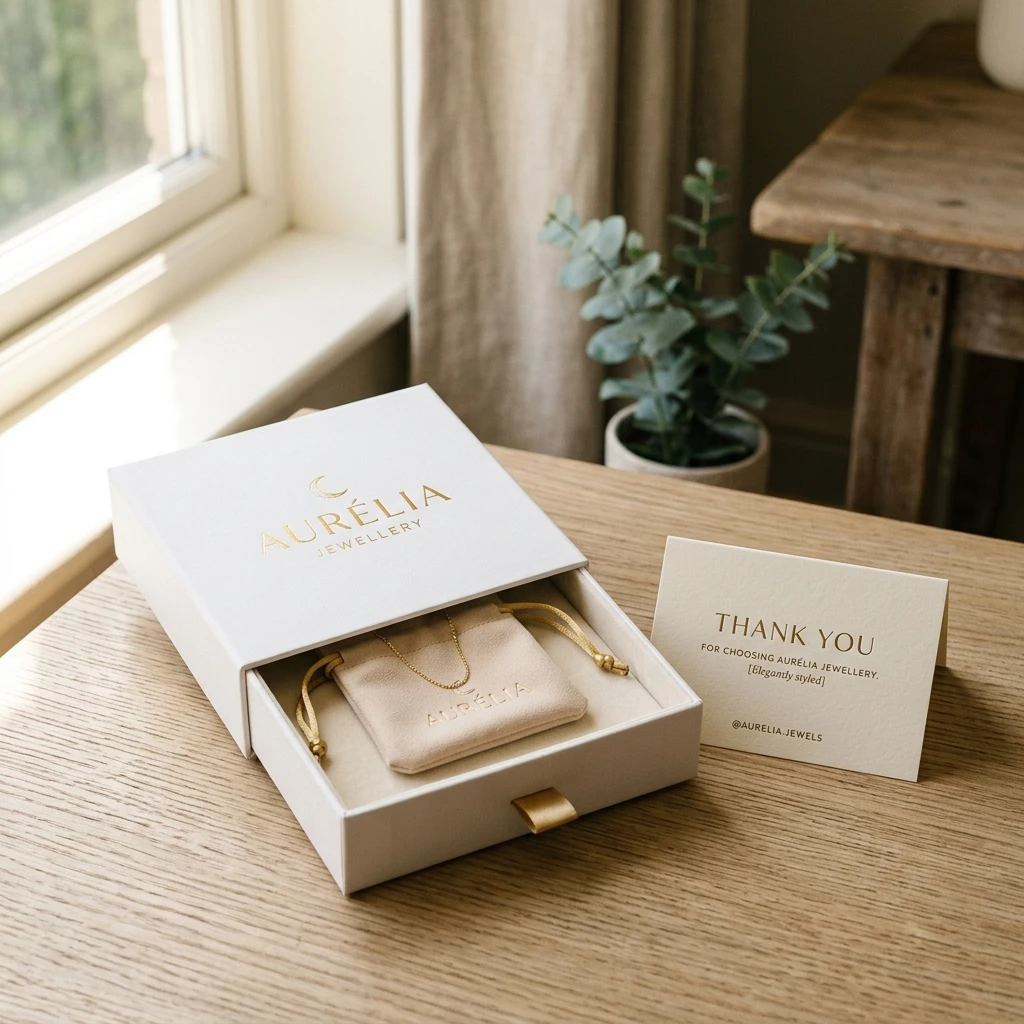
For logos, small brands should prioritize Foil Stamping.
Why?: While the initial "Plate Fee" ($30-$50) is a one-time cost, the unit cost for foil stamping on a small run is much lower than offset printing. Plus, the metallic texture (Gold, Rose Gold, or Silver) instantly elevates the perceived value of a $50 piece of jewelry to $150.
Sourcing Method | MOQ Range | Customization Level | Ideal For |
|---|---|---|---|
Stock + Sticker | 50-100 | Low | Brand Launch / Testing |
Stock + Foil Stamp | 300-500 | Medium | Emerging Etsy Brands |
Fully Custom OEM | 1,000+ | High | Established DTC Brands |
The Brand: Aura Jewelry, a handmade sterling silver brand selling on Etsy and local markets. The Problem: Using generic plastic-baggies and cardboard mailers led to a high return rate (approx. 7%) due to items tangling during shipping. Customers also perceived the $85 price point as "expensive" because of the low-end packaging.
The Solution:
Phase 1: Switched to a standard-sized microfiber pouch with a gold foil logo (MOQ: 500).
Phase 2: Replaced plastic mailers with a custom-branded cardstock envelope.
Result: Within 4 months, Aura's Repeat Purchase Rate increased by 22%. Customers began sharing "unboxing" videos on Instagram, leading to a 15% increase in organic traffic. The return rate dropped to 2% because the microfiber pouch kept chains from tangling.
The Lesson: For a small brand, custom packaging isn't an expense—it's an investment in Customer Lifetime Value (LTV).
Sustainability is no longer optional; it is a conversion metric. Small brands can lead this trend without a "luxury" budget.
FSC-Certified Paper: Ensure your paper boxes come from responsibly managed forests.
Molded Pulp Inserts: Replace plastic/foam inserts with molded bamboo or paper pulp. They are 100% biodegradable and have a unique, "earthy" luxury feel.
Reusable Packaging: Design your pouch so it can be used for travel. This keeps your brand in the customer's handbag for years.
Q: I only sell 50 items a month. Is it too early for custom packaging? A: No. Start with custom pouches or branded stickers on stock boxes. Even at 50 items, the "social proof" generated by one unboxing video can pay for the entire packaging run.
Q: How do I store 500 boxes in my home office? A: Consider Folding Boxes. They ship flat and can be assembled in seconds. While they lack the "rigid" feel of a magnetic box, they save 90% on storage space and shipping costs.
Q: What is the most important "luxury" detail to get right? A: The Insert. If the jewelry rattles inside the box, the luxury illusion is broken. Ensure your insert has the correct slits for your specific earrings or necklaces.
At Yu-Touch, we have grown alongside hundreds of small brands. We understand that a 500-piece order is just as important as a 50,000-piece one. Our Xiamen facility offers Rapid Prototyping and Small-Batch Customization, allowing you to test new materials like microfiber and molded pulp without massive upfront risk.
Explore our Low-MOQ Options orContact our Procurement Team for a 'Logistics-First' quote and sample kit today. to see our 2026 material collection in person.