
Views: 0 Author: Site Editor Publish Time: 2026-06-08 Origin: Site


The velvet pouch is the undisputed queen of luxury packaging, offering a tactile richness that synthetic materials struggle to replicate.
In the competitive landscape of 2026, where digital brands are fighting for every second of a consumer's attention, the velvet jewelry pouch remains one of the most powerful tools in a brand's arsenal. It is more than just a container; it is a sensory bridge between the digital purchase and the physical reality of a luxury product. When a customer feels the weight and the "nap" (the directional pile) of high-quality velvet, their brain registers a "premium" signal before they even see the jewelry inside.
However, for a B2B buyer or a product designer, the term "velvet" is deceptively broad. From low-cost crushed velvet to high-GSM (grams per square meter) luxury velvet, the quality gap is massive. Choosing the wrong grade can lead to "shedding" fibers on your jewelry, pilling after three uses, or a cheap, shiny appearance that devalues your brand. At Utouch Packaging, we specialize in high-density, anti-lint velvet solutions that meet the rigorous standards of global luxury houses. This guide breaks down the technical specs you need to know.
The single most important technical metric for a velvet jewelry pouch is GSM. This measures the weight of the fabric per square meter, which directly correlates to the density of the vertical fibers (the "pile").
Standard Grade (80-120 GSM): Common in mass-market packaging. It is thin, often slightly translucent, and provides minimal cushioning.
Premium Grade (150-180 GSM): The "Sweet Spot" for demi-fine brands. It offers a rich hand-feel, a non-see-through finish, and excellent durability.
Luxury Grade (200-250+ GSM): Used by high-jewelry and watch brands. It feels incredibly plush, heavy, and provides the "sinking" feeling when you press into the fabric.
B2B Insight: High-GSM velvet doesn't just feel better; it prints better. A dense pile provides a more stable foundation for hot foil stamping, ensuring that the metallic edges of your logo remain crisp and don't "sink" unevenly into the fibers.
Because velvet has a textured surface, your choice of branding method is critical.
Hot Foil Stamping: This is the gold standard for velvet. By using heat and pressure to transfer a metallic foil into the fibers, it creates a recessed, permanent mark that shines brilliantly against the matte texture of the velvet.
Silk Screen Printing: While cost-effective for large logos, it can be tricky on high-pile velvet. The ink tends to sit on top of the fibers, and if the "nap" is disturbed, the logo can appear broken or inconsistent. We recommend this only for low-pile or "short-hair" velvet.
Embroidery: For an artisanal, "old-world" look, embroidery on velvet is stunning. However, it adds significant bulk and cost, and is best reserved for larger travel pouches or luxury sets.
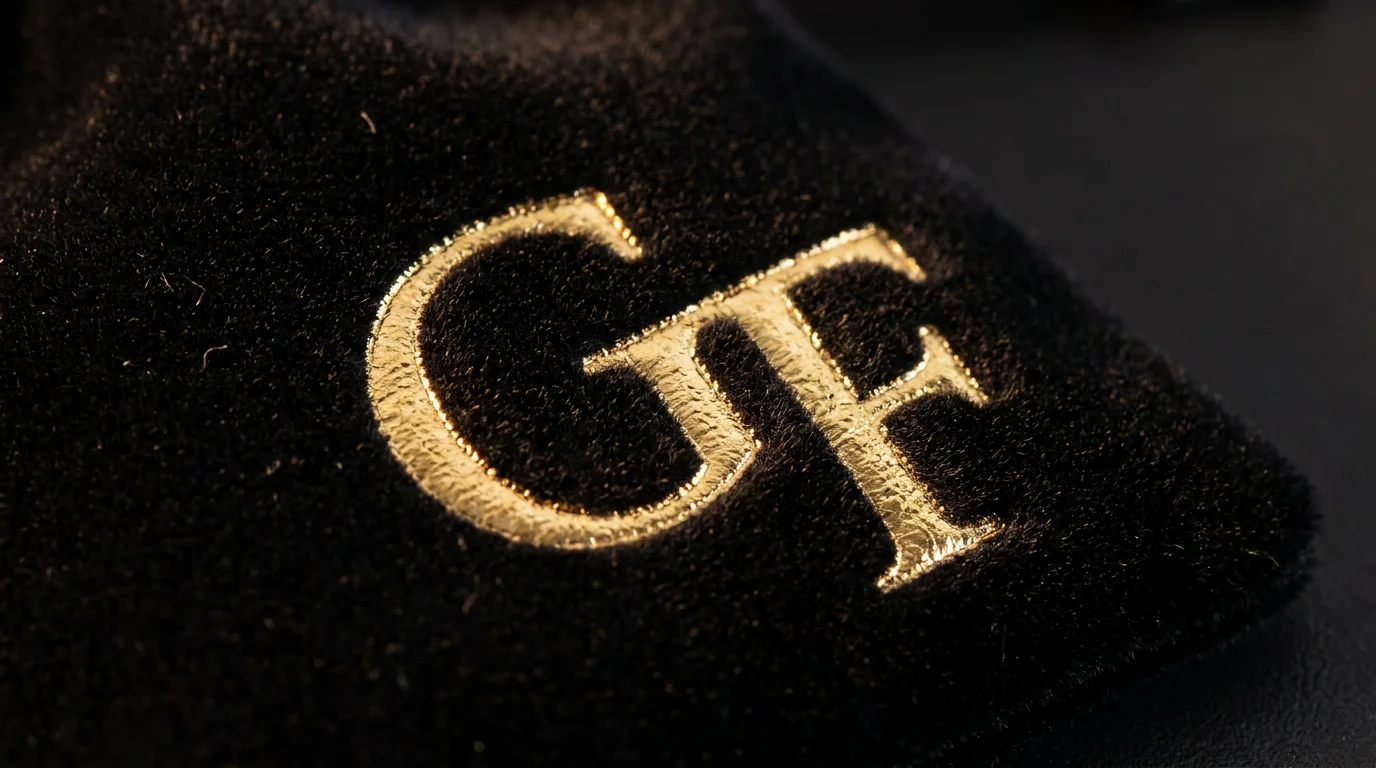
Precision is the hallmark of luxury. A high-density velvet allows for sharp, mirror-finish foil stamping that won't crack or peel.
Horology House, a boutique watchmaker based in Switzerland, specialized in micro-brand mechanical watches. Their engineering was flawless, but their price point was stuck at $800. They wanted to launch their "Heritage Collection" at $1,500, but their existing packaging — a standard microfiber pouch inside a cardboard box — felt too "techy" and not "traditional luxury."
Feedback from their top customers was clear: "The watch is a masterpiece, but the presentation feels like a pair of high-end sunglasses." They needed a material that communicated heritage, weight, and timelessness.
The brand manager contacted Utouch Packaging with a challenge: "We need a pouch that feels like a family heirloom." We moved away from the thin microfiber and began testing different grades of velvet. We focused on three pillars: GSM, Lint Resistance, and Color Depth.
We realized that standard velvet often left "dust" or tiny fibers on the polished watch crystals — a dealbreaker for a $1,500 product. We proposed a Double-Faced 220 GSM Luxury Velvet that had been treated with an anti-static finish to repel lint and dust.
We designed a custom 12x15cm pouch for them:
Outer Material: 220 GSM high-density velvet in a bespoke "Midnight Navy" color.
Inner Lining: A smooth charcoal-grey silk lining to ensure the watch case was protected from any interior friction.
Branding: A matte silver foil stamp of their crest, which provided a subtle "quiet luxury" contrast to the navy blue.
Drawstring: A 5mm thick twisted silk cord with weighted metal aglets (tips) to add physical gravity to the package.
The results of the packaging pivot were immediate:
Price Achievement: The Heritage Collection successfully sold out at the $1,500 price point. Reviewers specifically mentioned the "incredible weight and softness" of the storage pouch.
Brand Perception: A post-purchase survey showed that customers' "Brand Prestige Rating" increased from 6.8 to 9.2 out of 10.
Customer Retention: The brand saw a 15% increase in repeat customers, many of whom noted they now use the pouch as their permanent travel case for their collection.
By investing an extra $2.50 per unit in a velvet jewelry pouch, Horology House unlocked a $700 increase in retail value.
The color of your velvet jewelry pouch does more than just match your logo; it acts as a visual "stage" for the metal and stones inside. Understanding the color psychology of velvet can help you increase the "perceived brightness" of your jewelry without changing the product itself.
Midnight Navy & Deep Emerald: These are the "prestige" colors. They provide a high-contrast background for 18k Yellow Gold and colorless diamonds. The coolness of the blue and green cancels out any unwanted yellow tones in lower-grade diamonds, making the jewelry appear whiter and more brilliant.
Burgundy & Bordeaux: These warm tones evoke a sense of "heritage" and "antiquity." They are the perfect match for Rose Gold and vintage-style rubies or garnets. The warmth of the velvet amplifies the rosy hues of the metal, creating a cohesive, romantic unboxing experience.
Slate Grey & Champagne: These are the "Modern Luxury" choices. They appeal to a younger, minimalist demographic that finds black or navy too "stuffy." Slate grey is particularly effective for Sterling Silver and White Gold, as it provides a sophisticated, monochromatic look that highlights the sleek lines of modern jewelry design. Choosing the right shade is a strategic branding decision that Utouch Packaging helps you navigate through our extensive custom-dye library.
Technical Factor | Luxury Velvet (200+ GSM) | Premium Microfiber | Faux Suede |
|---|---|---|---|
Primary Vibe | Classic, Traditional Luxury | Modern, Tech, Minimal | Artisanal, Rugged |
Tactile Feeling | Plush, Rich "Nap" | Smooth, Silky | Dry, Textured |
Best Logo Method | Hot Foil Stamping | Blind Emboss / Screen Print | Debossing / Heat Transfer |
Protection Level | Highest (Cushioning) | High (Scratch-resistance) | Moderate |
Durability | Very High | Highest | Medium |
Cost Tier | High | Mid-High | Mid |
The "Achilles' heel" of poor-quality velvet is lint. Low-GSM velvet uses short, loose fibers that can rub off onto the jewelry, especially under the friction of shipping. This is a nightmare for B2B buyers who don't want their retailers to have to clean the jewelry before displaying it.
At Utouch Packaging, we use two proprietary steps to solve this:
Post-Weaving Vacuuming: Every roll of our luxury velvet is vacuumed at the factory to remove loose fibers from the manufacturing process.
Anti-Static Treatment: We apply a chemical finish that reduces the fabric's static electricity, ensuring it doesn't "attract" dust from the environment during the packing process.
Velvet is traditionally preferred for rings because the plush fibers hold the ring in place better inside the pouch. However, if your ring is high-polished silver, a microfiber pouch with an anti-tarnish treatment might be technically superior for long-term storage.
Yes. We have a library of over 50 "Stock Colors" that cover most luxury palettes. For large orders (typically 5,000+ units), we can custom-dye the velvet to your exact Pantone reference.
Marginally. A 200 GSM velvet pouch is heavier than an 80 GSM one, but since the overall weight of a jewelry pouch is so low (usually under 20 grams), it rarely pushes you into a higher shipping tier. The branding impact far outweighs the tiny increase in postage.
For custom logo velvet jewelry pouches, our MOQ starts at 500 units for stock colors and 5,000 units for custom-dyed colors.
Ask for the "Stretch and Shed" test. Pull the fabric — if the backing is visible when stretched, the GSM is too low. Rub the fabric against a white paper — if it leaves fibers, the quality is poor. Our samples always pass both tests.
In a world of flat screens, the physical touch of a velvet jewelry pouch is a rare opportunity to communicate quality without saying a word. By selecting a high-GSM, anti-lint velvet with precision foil stamping, you aren't just buying packaging; you are buying trust.
Utouch Packaging is a specialist in the luxury velvet category. Ready to feel the difference? Contact our Procurement Team for a 'Logistics-First' quote and sample kit today. to see our 200 GSM colors and foil-stamping quality in person.
